
About the Program
Duration
2 Years
Annual Intake
30 Seats
A Master of Science (M.Sc) in Microbiology is a graduate-level program that focuses on the study of microorganisms, including bacteria, viruses, fungi, and parasites, and their interaction with humans, animals, plants, and the environment. Here's an overview of what you can expect from an M.Sc in Microbiology program. The curriculum typically includes core courses in microbiology, covering topics such as microbial physiology, genetics, immunology, virology, mycology, and microbial ecology. Practical laboratory work is a significant component of the program. Students engage in hands-on experiments to learn techniques for culturing, isolating, and identifying microorganisms, as well as molecular biology techniques such as PCR (polymerase chain reaction). Some programs offer specializations or elective courses in areas such as medical microbiology, environmental microbiology, industrial microbiology, microbial biotechnology, or bioinformatics. Many M.Sc programs require students to complete a research project or thesis under the supervision of a faculty member. This research component allows students to delve deeper into a specific area of microbiology and develop their critical thinking and research skills. Students may be required to participate in seminars, present research findings, and engage in discussions with peers and faculty members.
The program emphasizes the practical applications of microbiology in various fields such as medicine, agriculture, food industry, pharmaceuticals, environmental science. Microbiology intersects with other disciplines such as molecular biology, biochemistry, immunology, and genetics. Therefore, students may encounter interdisciplinary coursework and collaborative research opportunities. Graduates of M.Sc in Microbiology programs can pursue careers in research institutions, pharmaceutical companies, biotechnology firms, government agencies, hospitals, clinical laboratories, agricultural organizations, environmental agencies, and academia. Overall, an M.Sc in Microbiology provides students with a strong foundation in microbiological principles, laboratory techniques, and research methodologies, preparing them for careers in a variety of fields related to microbiology and biotechnology.
Curriculum & Syllabus
| Code | Subject Name |
|---|---|
| MSCMB11506 | Practicals |
| MSCMB11501 | Cell Biology |
| MSCMB11502 | Biochemistry |
| MSCMB11503 | Instrumentation in Biological Sciences |
| MSCMB11504 | Environmental Pollution and Biotechnology |
| MSCMB11505 | Genetics, Evolution and Biostatastics |
Video About Department
Campus Placements

JOSHI PARTH ASHOKBHAI

.png)
SANKHAT KALPESHBHAI DHARMASHIBHAI


BARAIYA DHARTI HITESHBHAI

Bhalodiya Charmi
.jpg)

Vakani Janki
.jpg)

Bhojani Bhargav
.jpg)
State-of-the-Art Infrastructure (Laboratories)
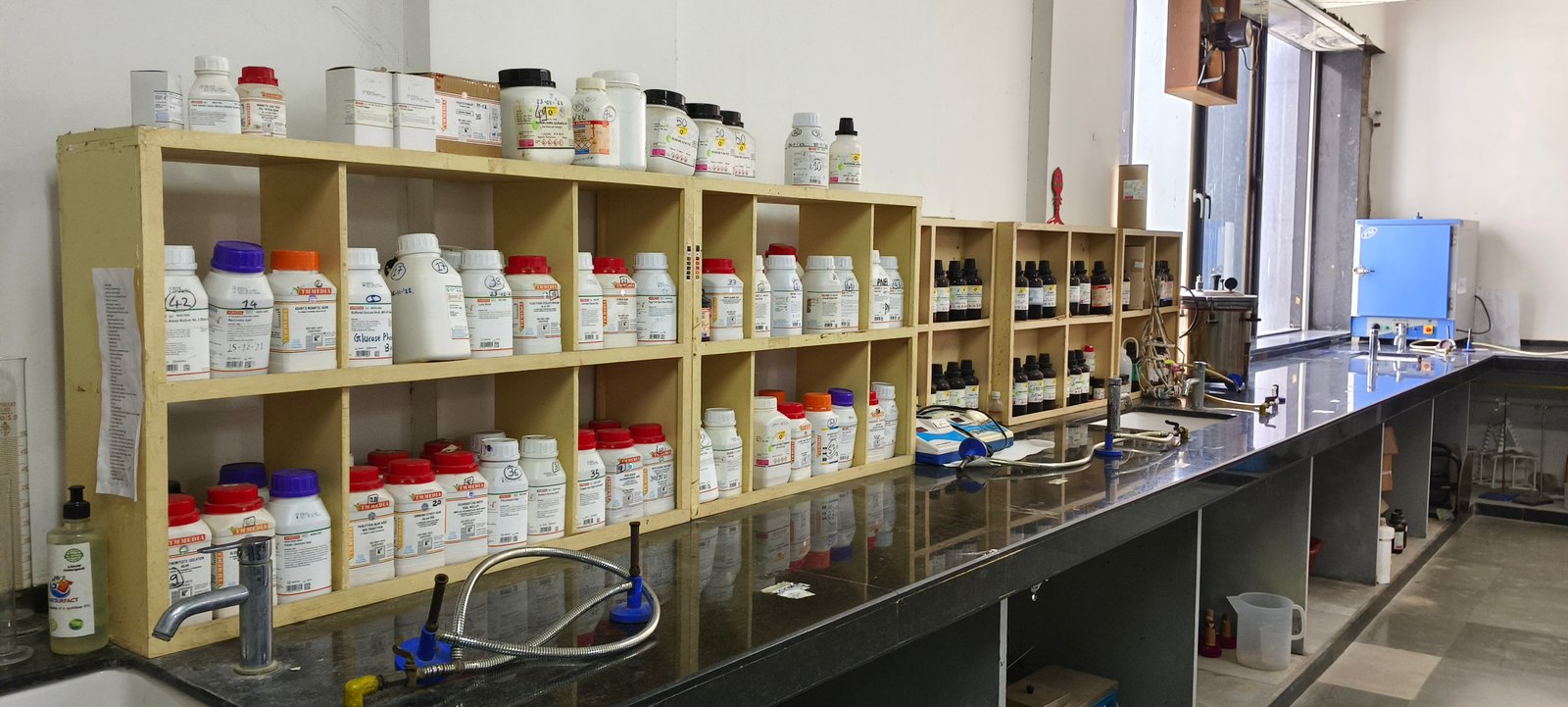
MICROBIOLOGY LABORATORY
Our B.Sc. & M.Sc. Microbiology course involves the study of microorganisms with particular emphasis on the biology of bacteria, viruses, fungi and pro...
Explore Laboratories2+
Laboratories
200+
Equipment

Microbiology Laboratory
Our B.Sc. & M.Sc. Microbiology course involves the study of microorganisms with particular emphasis on the biology of bacteria, viruses, fungi and pro...
Explore Laboratories2+
Laboratories
200+
Equipment
Quick Access
View AllNews & Activities
Program Resources
Important Links
Daily Updates
